application
Tannase for Wine Tannin Management | Tannora
Application-led guidance on using tannase to support astringency control, haze reduction, filtration performance, and tannin refinement in wine and fruit wine processing.
Request pricing Application-led guidance on using tannase to support astringency control, haze reduction, filtration performance, and tannin refinement in wine and fruit wine processing.
Request pricingTannora supplies tannase for wine, fruit wine, and specialty fermented beverage processes where tannin behavior has to be shaped with precision—not stripped blindly.
Tannase (Tannin Acyl Hydrolase) hydrolyzes galloyl ester bonds in hydrolysable tannins. In practical cellar and beverage production terms, that can help reduce harsh astringency, improve clarification behavior, support filtration throughput, and create a cleaner sensory finish in tannin-rich matrices.
Tannase is most useful when the issue is not simply “too much tannin,” but poorly behaving tannin: coarse grip, unstable haze, slow clarification, fouling-prone filtration, or extract-driven bitterness that needs selective correction.
Common application areas include:
Hydrolysable tannins can contribute sharp, drying, sometimes metallic astringency. Tannase supports targeted modification of these structures, helping teams move from coarse grip toward a more integrated texture.
This is especially relevant where tannin source, extraction intensity, or botanical inclusion creates a finish that feels heavy, hard, or unbalanced.
Tannin-protein and polyphenol interactions can complicate clarification. By modifying selected tannin structures, tannase may help reduce haze-forming tendencies and make separation steps more predictable.
It is commonly evaluated alongside fining, settling, centrifugation, and polishing filtration plans.
Poorly controlled polyphenol clusters can increase fouling risk in sheet, pad, depth, or membrane filtration. Tannase can support cleaner process behavior by changing how tannin-rich fractions interact with solids, proteins, and filter media.
The result can be better decision-making around pre-clarification, polishing load, and bottling readiness.
For ingredient manufacturers and beverage teams using oak, tea, botanical, or fruit extracts, tannase can help refine extract behavior before the extract enters the final beverage system.
This allows tannin correction to be handled upstream, where trials are easier to measure and blending impact can be controlled.
Tannora recommends a matrix-specific bench screen before production use. Tannin structure, alcohol level, pH, sugar, protein load, metal content, SO₂ strategy, and fining history can all change the outcome.
A practical evaluation usually compares:
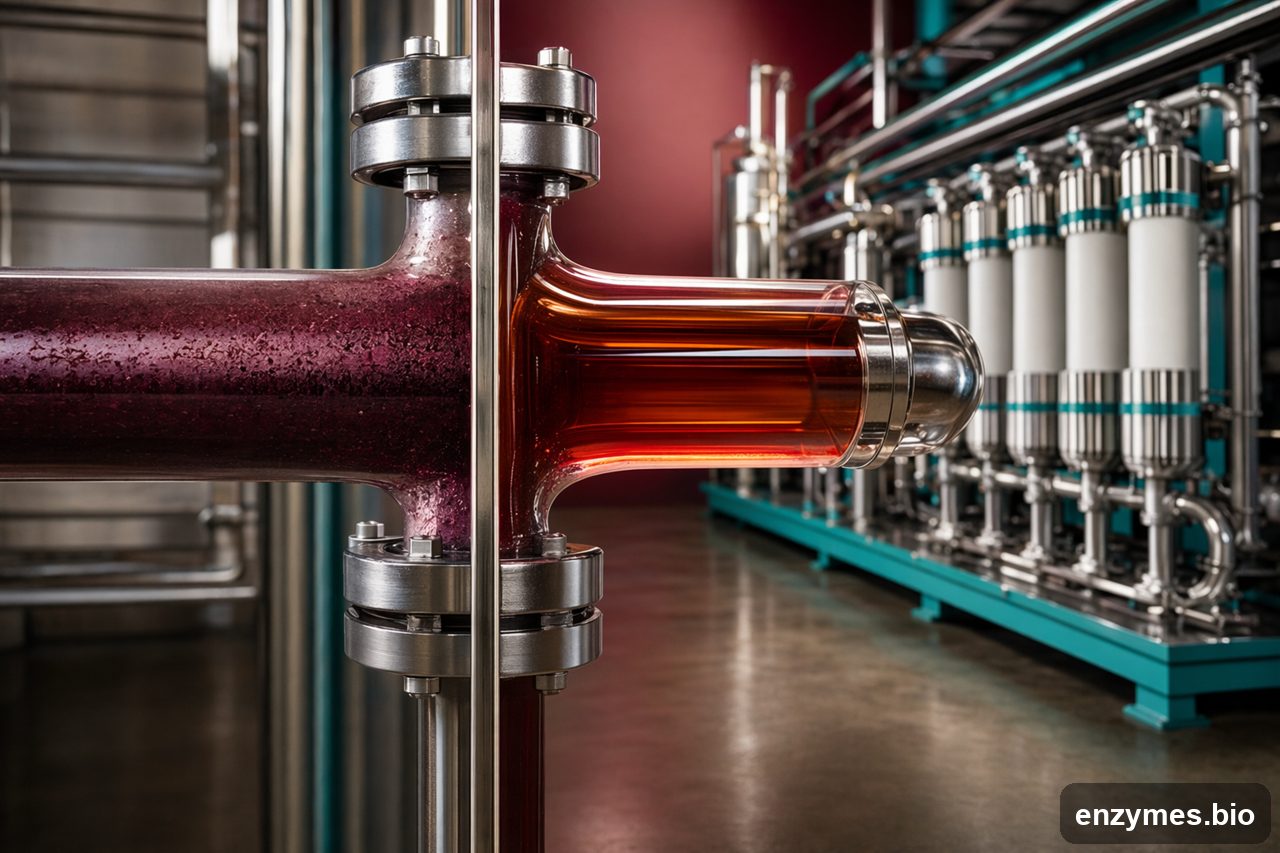
The goal is not maximum reaction. The goal is the best commercial balance between mouthfeel, clarity, stability, and process efficiency.
Tannase may be assessed at several stages depending on the product and the processing target:
Useful when the main objective is haze reduction, solids behavior, or improved downstream filtration.
Useful for correction lots, high-tannin components, or botanical extracts that need refinement before entering the final blend.
Useful when a beverage is close to specification but still shows coarse astringency or filtration instability.
Useful for oak, tea, fruit, or plant-derived inputs where tannin behavior can be tuned before dilution into the wine base.
Tannase programs should be checked against the full processing plan. Fining agents, pectolytic enzymes, protein stabilizers, cold stabilization, oxygen exposure, and filtration sequence can all influence final performance.
Tannora supports process teams with application guidance for:
When specifying tannase for wine applications, confirm the following before ordering:
Tannora provides B2B supply support for manufacturers, processors, wineries, beverage developers, and ingredient companies evaluating tannase as a controlled tannin-management tool.
If you are working with a tannin-heavy wine, fruit wine, botanical wine, or extract stream, send us the process context. We will help identify a practical trial path and supply format options for your production plan.
Tell us your application and volume — we reply with pricing and lead time.