learn
Tannase for Clarification and Haze Control
Application-led guide to using tannase for tea cream reduction, haze control, sediment management, filtration improvement, and clearer polyphenol-rich beverages and extracts.
Request pricing Application-led guide to using tannase for tea cream reduction, haze control, sediment management, filtration improvement, and clearer polyphenol-rich beverages and extracts.
Request pricingCloudiness in tannin-rich systems is rarely just a visual issue. It can signal unstable polyphenol complexes, filtration drag, sediment formation, yield loss, and avoidable rework. Tannora focuses on tannase as a controlled processing tool for processors working with tea, botanical extracts, fermented bases, fruit-derived liquids, and specialty ingredients where tannin behavior drives clarity and shelf appearance.
Tannase (Tannin Acyl Hydrolase) helps modify hydrolyzable tannins by cleaving ester linkages in tannin structures. In practical terms, this can reduce the tendency of tannins to form visible complexes with caffeine, proteins, minerals, polysaccharides, and other suspended solids.
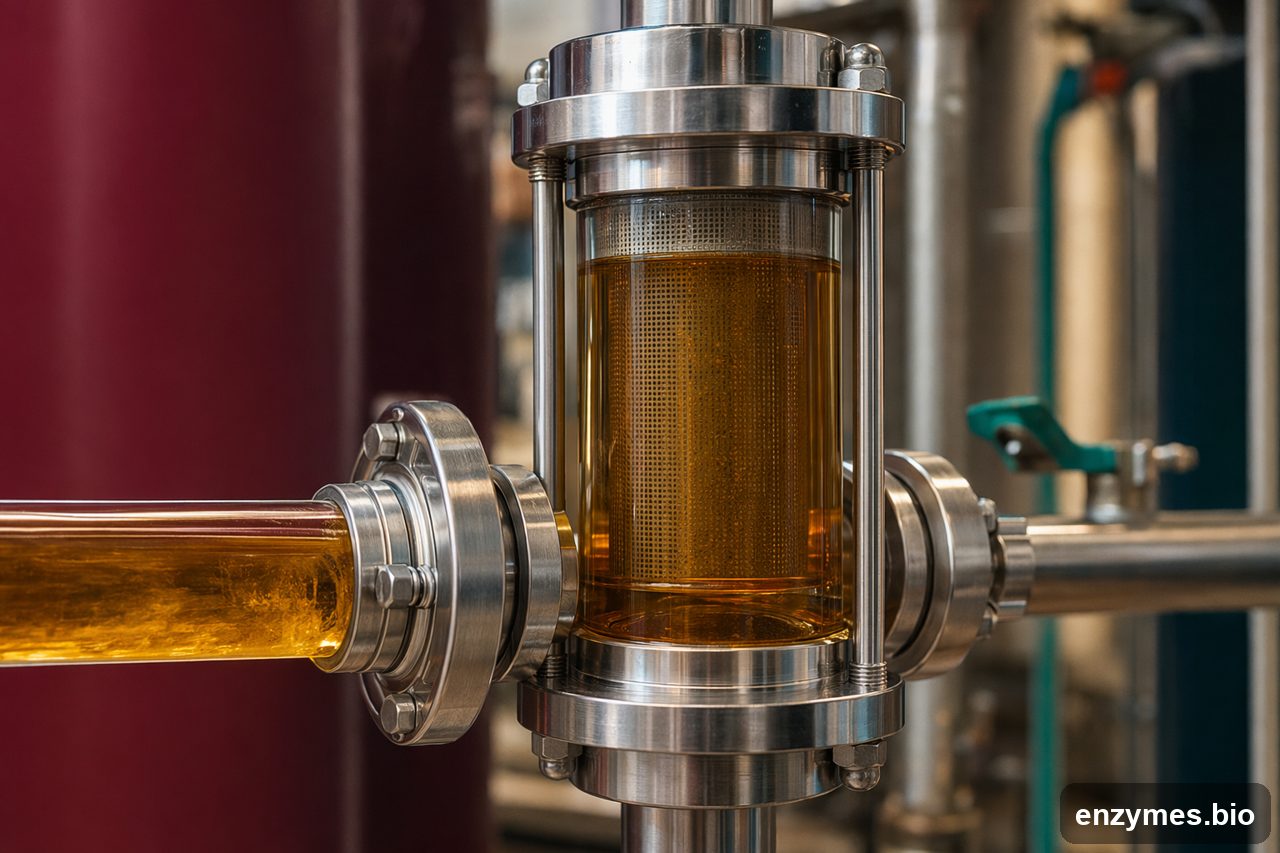
Tannin-related haze can appear immediately after extraction, during chilling, after concentration, or later in packaged product. Common drivers include:
These systems are especially sensitive because tannins do not behave like one ingredient. They shift with crop source, extraction intensity, pH, mineral profile, heat history, and time.
Tannase acts on tannin structures before they become difficult-to-remove haze or sediment. By transforming selected hydrolyzable tannins into smaller phenolic components, it can make the liquid easier to clarify and stabilize.
Application outcomes may include:
Tannase does not replace good separation design. It improves the behavior of the material entering separation, which is often where processors gain the most practical value.
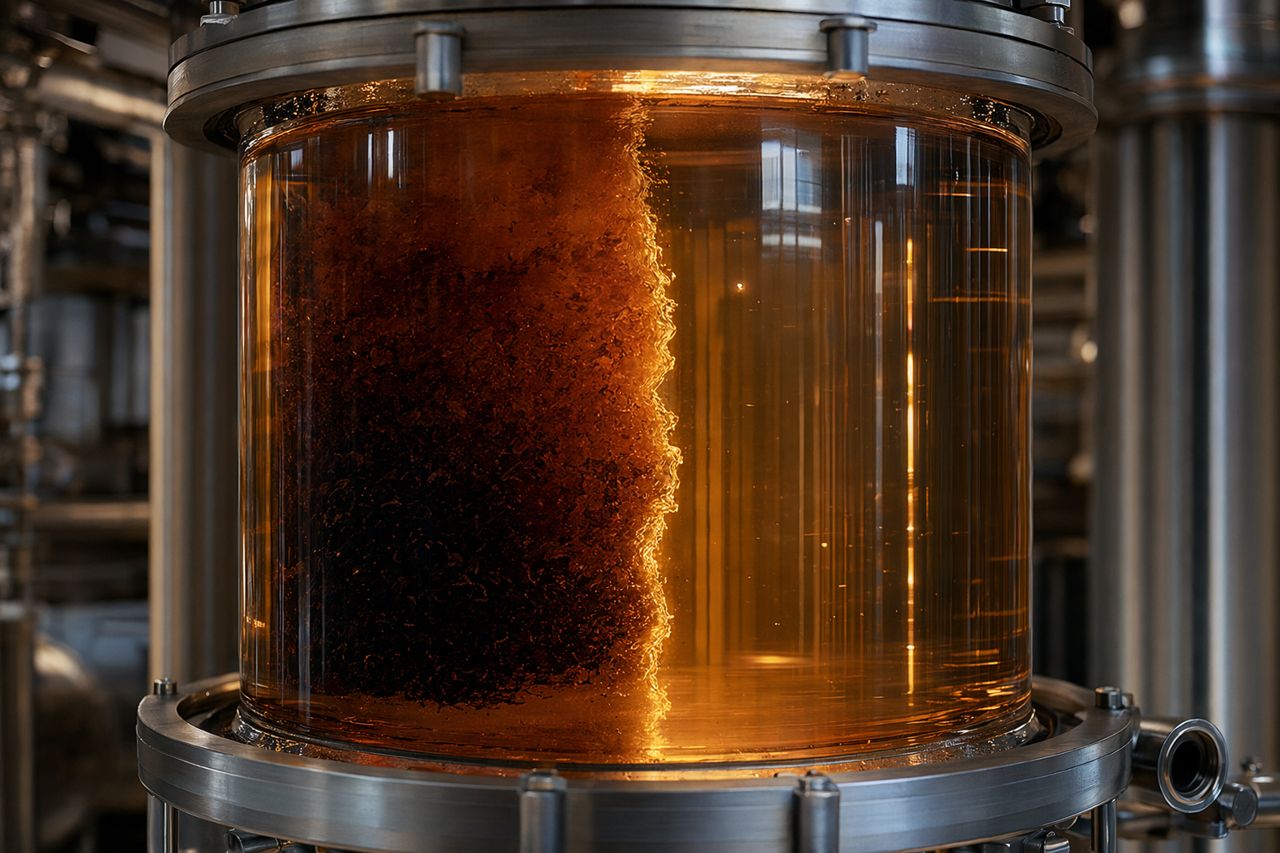
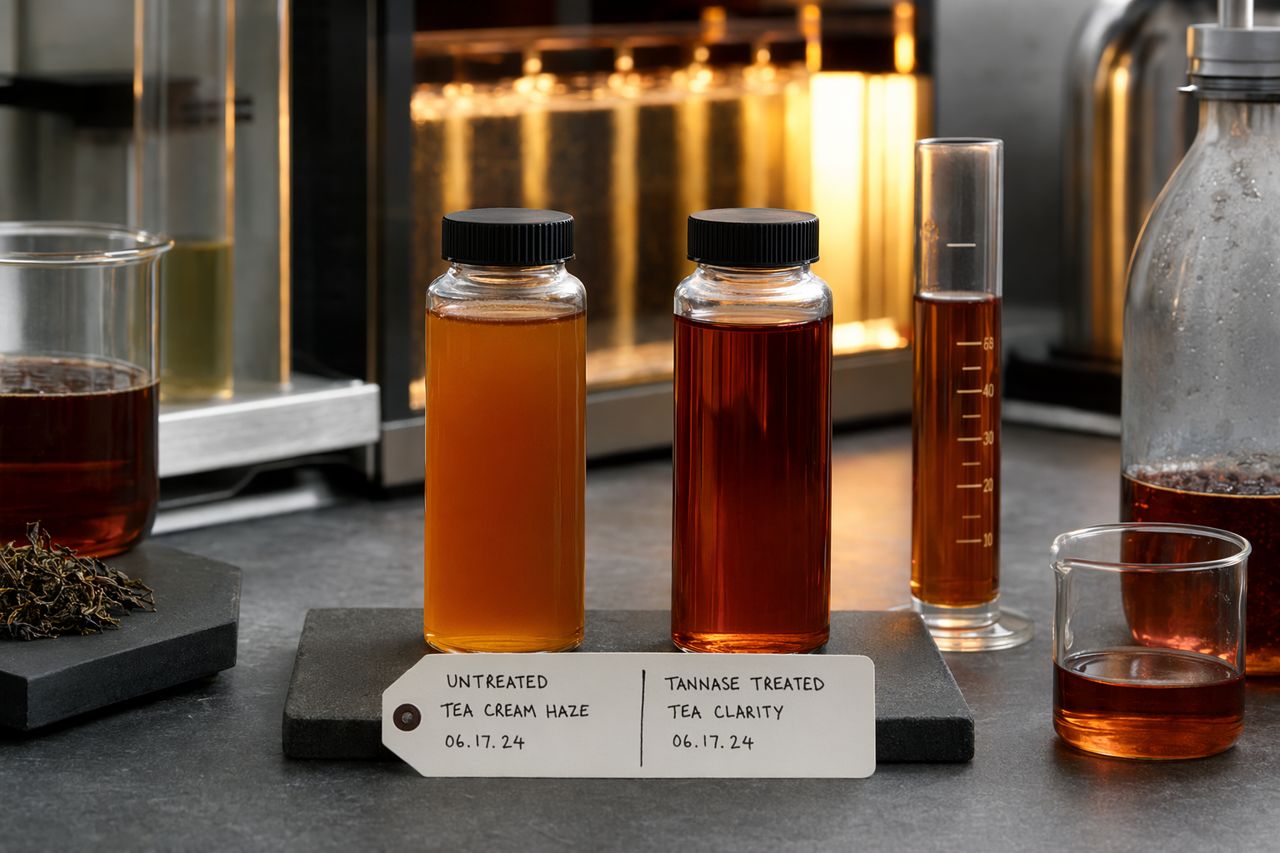
Tea is the classic tannase application. Tea cream forms when tea polyphenols interact with caffeine and other solids, especially after cooling. Tannase treatment can help create a clearer tea base with less chill haze, improved color brightness, and more predictable performance before bottling, concentration, or spray drying.
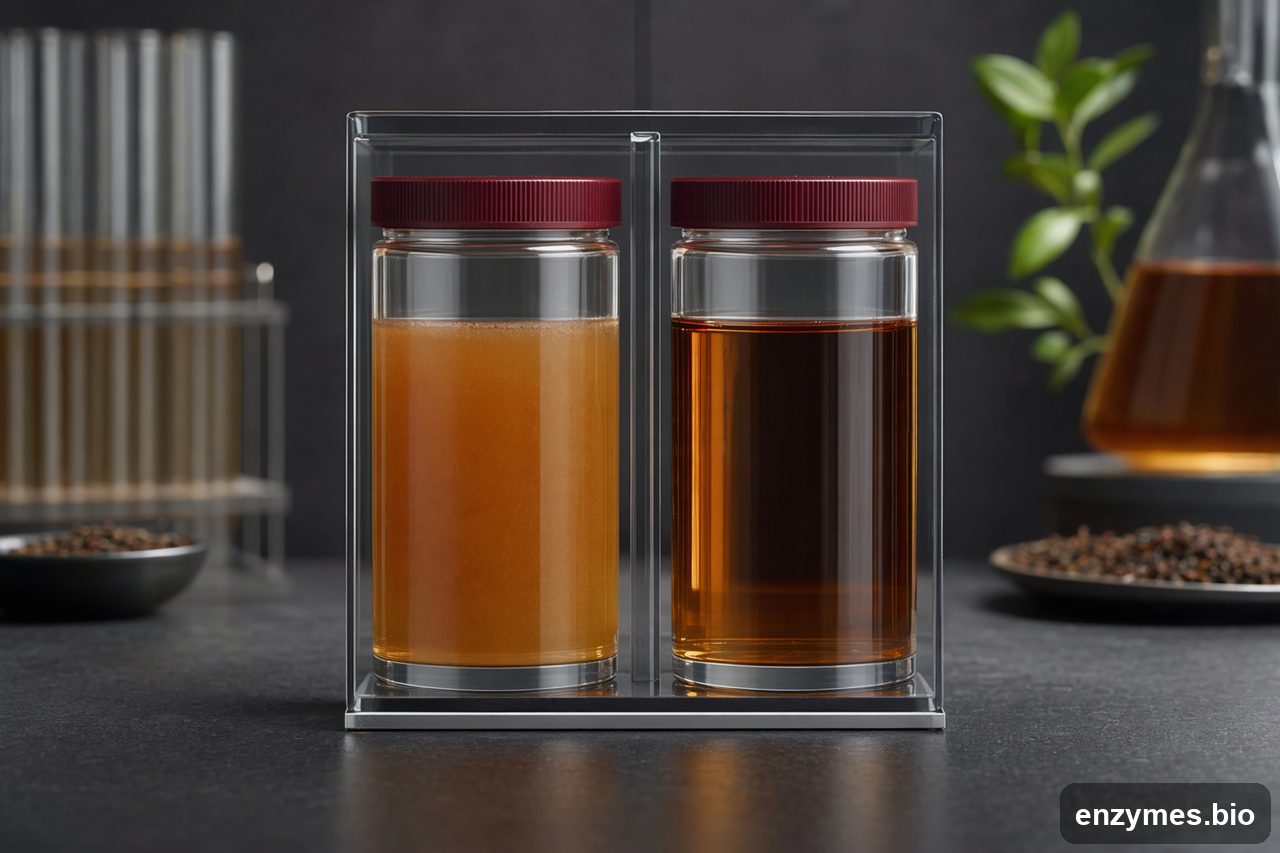
Typical use points include:
Botanical extracts often carry tannins that contribute to haze, darkening, astringency, and batch variability. Tannase can help processors manage polyphenol load while preserving the desired plant character.
Relevant substrates include:
In fermented or acidified systems, tannins can interact with proteins, yeast-derived components, and minerals. Tannase may support cleaner separation and more stable appearance when positioned before final clarification or polishing.
For ingredient manufacturers, clarity is not only an aesthetic specification. It affects customer formulation behavior, dosing consistency, solubility perception, and finished-product confidence. Tannase can be used as part of a process-control strategy for specialty extracts and polyphenol-managed ingredients.
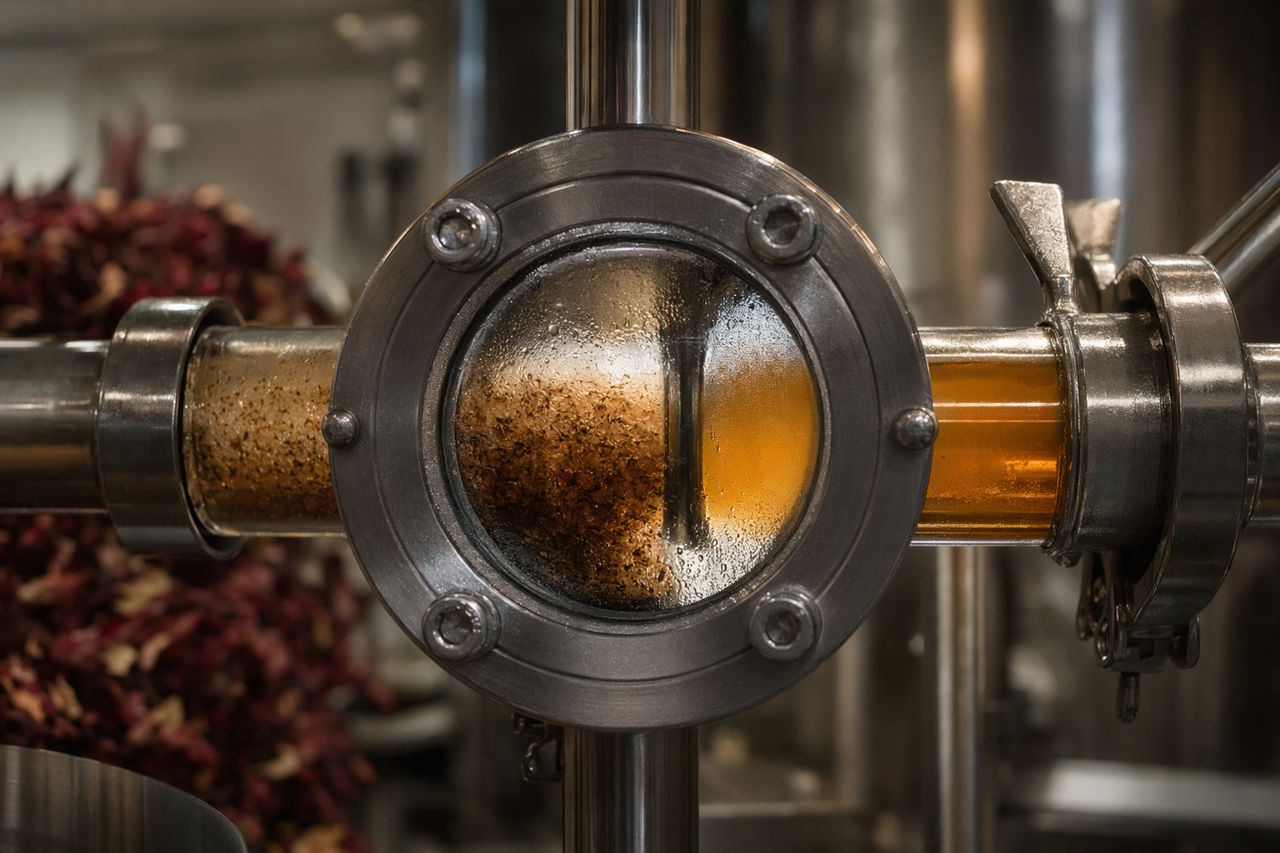
The most effective placement is usually upstream of a separation step, where tannase has contact with the soluble and colloidal tannin fraction before filtration or solids removal.
Common integration points:
The goal is not maximum reaction for its own sake. The goal is the right level of tannin modification for the clarity, flavor, filtration, and stability target.
Tannase performance depends on the substrate and the process environment. During development, evaluate:
For tea and botanical systems, chilled-hold testing is especially important. Some products look clear warm but develop haze after cooling or after several days of storage.
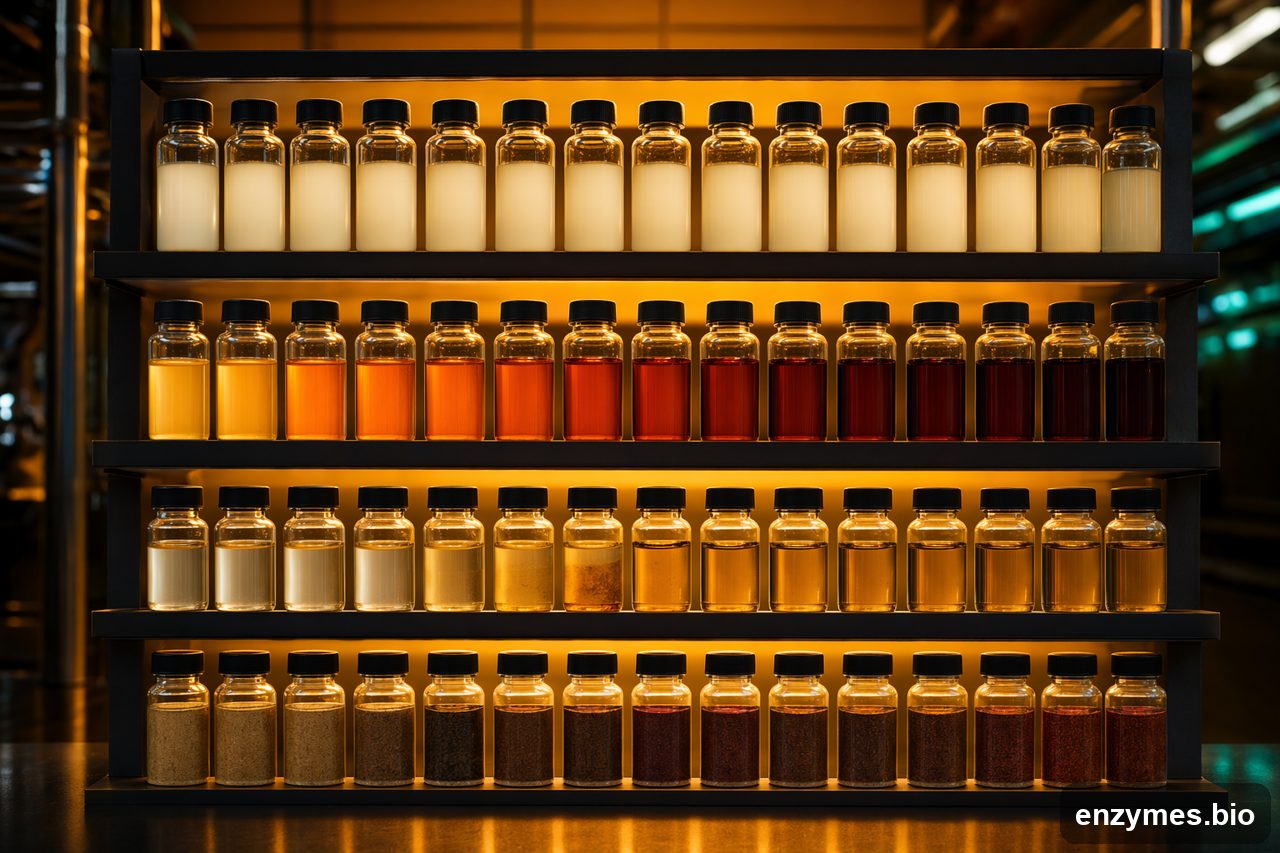
A useful trial compares treated and untreated material under the same process conditions. Recommended evaluation points include:
For commercial decisions, do not rely only on immediate clarity. The stronger test is clarity after downstream stress: cooling, heat exposure, concentration, blending, and shelf simulation.
Tannin control is a balance. Too much untreated tannin can create rough astringency, bitterness, and haze. Too aggressive a process can remove the botanical structure buyers expect. Tannase gives formulation teams another lever: modify the tannin profile rather than simply stripping material out.
In well-designed trials, processors often look for:
Tannora is built for application-led enzyme sourcing. We help technical buyers define where tannase fits in the line, what trial outcomes matter, and how to evaluate enzyme performance against real production constraints.
Bring us the practical details:
We will help frame a tannase option for bench testing, pilot validation, and scale-up planning.
If you are managing tea cream, cooling haze, sediment, or filtration drag in a tannin-rich process, send the details through the form below. A Tannora application contact will follow up with fit, availability, and pricing.
Tell us your application and volume — we reply with pricing and lead time.